AI Strategy
Operating Systems
•
4 minutes
Claude or a Verticalized Platform? The Question PE Firms Are Getting Backwards
General AI makes analysts faster. Building institutional intelligence requires something different.
Rafi Menachem
CEO & Founder
Share
We built Syntari while Claude existed. I get asked about that decision regularly.
The assumption behind the question is usually: if general AI is good enough, why build something specific? Fair question. Here's the honest answer.
What general AI actually gives you
Claude, GPT-4, Gemini — these are genuinely remarkable tools. I use them every day. Our team uses them. They compress hours of synthesis into minutes, surface patterns across documents faster than any analyst, and write better than most people.
But here's what they don't do.
They don't know your portfolio. Every session starts from zero. You can paste in a deck, a transcript, a data room — but when you close the window, it's gone. The next analyst who opens a new chat brings none of that context with them.
That's not a criticism. It's the architecture. General AI tools are built for individual productivity, not institutional intelligence.
The failure mode we see most often: a PE firm deploys Claude across the deal team and gets real productivity wins: faster memo drafts, better research synthesis, cleaner models. Six months later, they've made every analyst faster, but the firm hasn't gotten smarter. Analysis from Fund III doesn't inform Fund IV. The operating partner's playbook doesn't travel with the deal. The institutional knowledge is still in people's heads, and people leave.
In Syntari's work with PE firms, the pattern is consistent: individual productivity gains are visible within 60 days. Firm-level decision velocity, meaning how fast the firm reaches conviction on a deal, has not improved in a single engagement where a shared context layer was absent.
Individual productivity gains that don't compound aren't a strategy. They're a starting point.
What is institutional intelligence in private equity?
Institutional intelligence in private equity is the accumulated deal knowledge, decision patterns, and operating playbooks that live in the firm's systems, accessible to any team member working on any deal, and compounding as the firm makes more decisions.
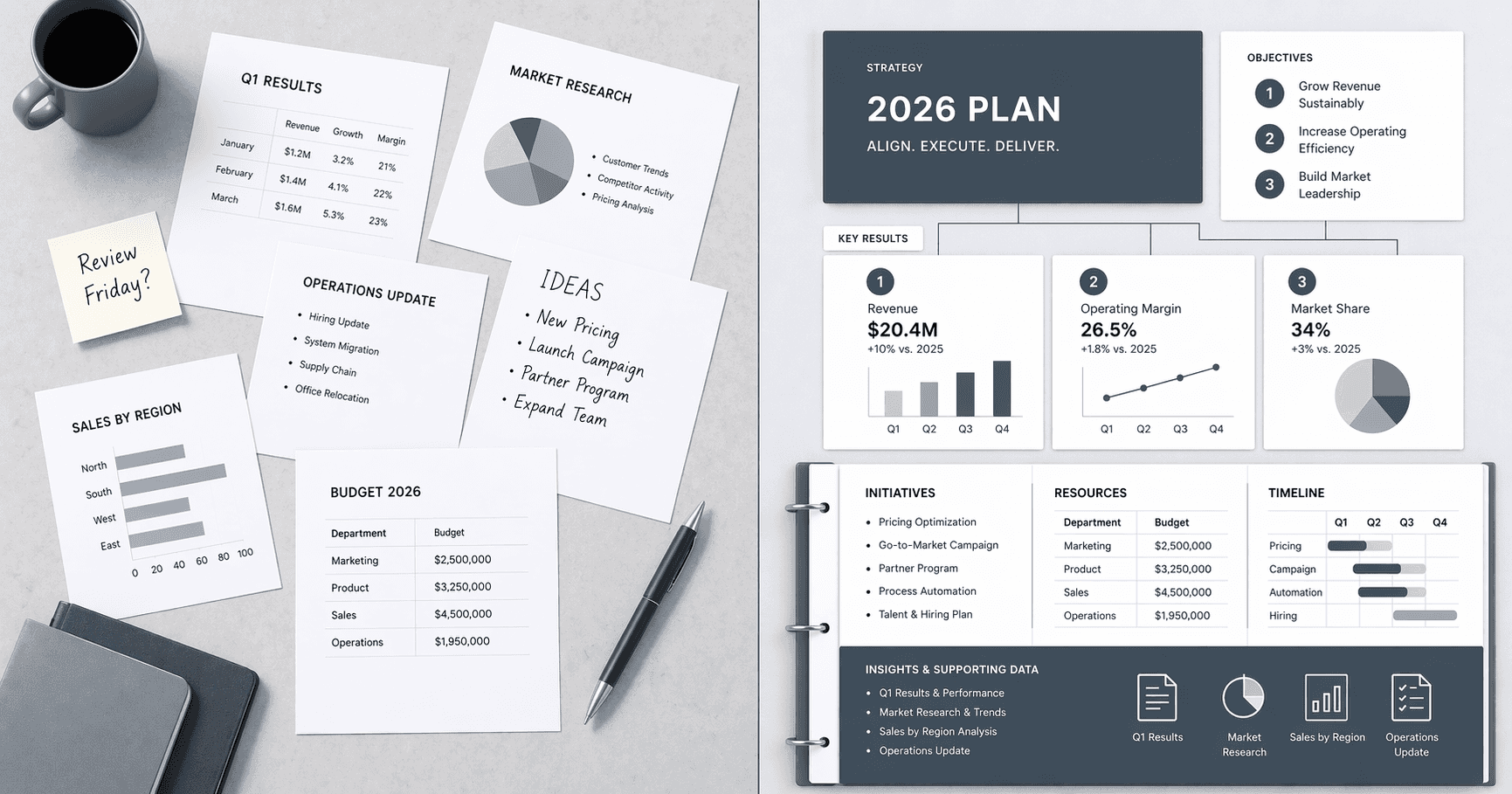
Most PE firms have the raw materials: decades of deal data, fund-over-fund learnings, operating partner frameworks that have been stress-tested across portfolios. The problem is that this knowledge lives in people rather than in systems. Analysts replicate research that's already been done. Operating partners rebuild playbooks from memory. When senior people leave, the institutional context walks out with them.
General AI tools accelerate individual work. They don't solve the institutional intelligence problem. The context layer is still missing, and without it, every new hire, every new fund, every new deal cycle starts from approximately zero.
What a verticalized PE platform actually gives you
A verticalized AI platform for private equity is one in which the investment lifecycle context (deal sourcing, underwriting, portfolio monitoring, operating partner workflows) is embedded in the system itself, not supplied by the user each session.
That's the architecture difference. Not smarter AI. Different structure.
When a deal moves through Syntari, the context travels with it. What the origination team flagged in sourcing is visible to the diligence team. What the diligence team learned is available to the operating partners at the portfolio level. The decisions your firm has made before are accessible the next time a similar deal comes across the desk: what worked, what didn't, what the GP pushed back on.
This is what we mean when we say institutional intelligence. It's not about any single model being smarter. It's about whether the system learns when your people work in it.
The front-to-back connection matters here too. Deal sourcing, underwriting, portfolio monitoring, and operating workflows aren't separate problems. They're one problem that most firms have organized into silos. A verticalized platform connects those silos in shared context. A general AI tool does not; it can help within each silo, but it can't bridge them.
Should PE firms use general AI or a purpose-built platform?
The answer depends on where institutional context needs to live.
General AI tools like Claude are excellent for individual synthesis, document analysis, and drafting: tasks where one person needs to go faster. A purpose-built PE platform embeds that context in the system, connecting deal data, portfolio intelligence, and operating workflows in shared context that travels with the work and builds over time.
The question isn't which AI is smarter. It's where your institutional knowledge lives, and whether your AI investment is building toward something that compounds.
The failure mode of vertical platforms (and how to avoid it)
We've seen firms get this wrong in the other direction too, so let's be clear: a platform without operating partner buy-in replicates your existing dysfunction at AI speed.
Adoption is the work. This is not a technology problem. It's a change management problem wrapped in a technology purchase.
The sequencing requirement is: Proof of Value first, then Scale, then Sustain. Most firms skip to Scale: they buy the platform, run a kickoff, and expect behavior change. It doesn't work that way. The firms seeing ROI start with one high-value workflow, instrument it properly, demonstrate the outcome, and then expand. The firms still in pilot mode 18 months later tried to change everything at once.
A platform inside a broken workflow replicates the dysfunction. That constraint doesn't go away because you've invested in infrastructure.
The actual decision framework
Three questions that give you the right answer faster than any vendor demo:
Where does institutional context need to live? If the answer is "in individual analysts' heads," general AI is sufficient. If the answer is "in the firm, accessible to everyone working on a deal," you need a platform.
Which workflows need to be connected? If deal sourcing and portfolio monitoring are siloed, a general AI tool can make each silo faster but can't bridge them. That's an architecture problem, not a prompting problem.
Who needs to act on the output? If it's one analyst, general AI is sufficient. If it's a deal team, an operating partner, and a portfolio company CEO, the context needs to travel with the work across all three.
Most PE firms can answer these questions in 20 minutes. Most don't ask them before making the decision.
Where this lands
The firms asking "Claude or a vertical platform" are usually asking the wrong question. The real question is whether your AI investment is building institutional intelligence or just making individuals faster.
Those are different bets. They compound differently. And 24 months from now, the gap between firms that made the right architectural decision and firms that didn't will be visible in their decision latency, their operating leverage, and their ability to scale the way they work without scaling headcount proportionally.
Human intelligence, amplified. At the firm level, not just the analyst level.
That's the actual art of the possible here.
What's your first use case? And who in your firm owns what it produces?
Rafi Menachem is the CEO and co-founder of Syntari International, an AI transformation firm. Syntari is an enterprise AI orchestration platform for private equity firms, connecting deal sourcing, underwriting, and portfolio monitoring in shared context.